
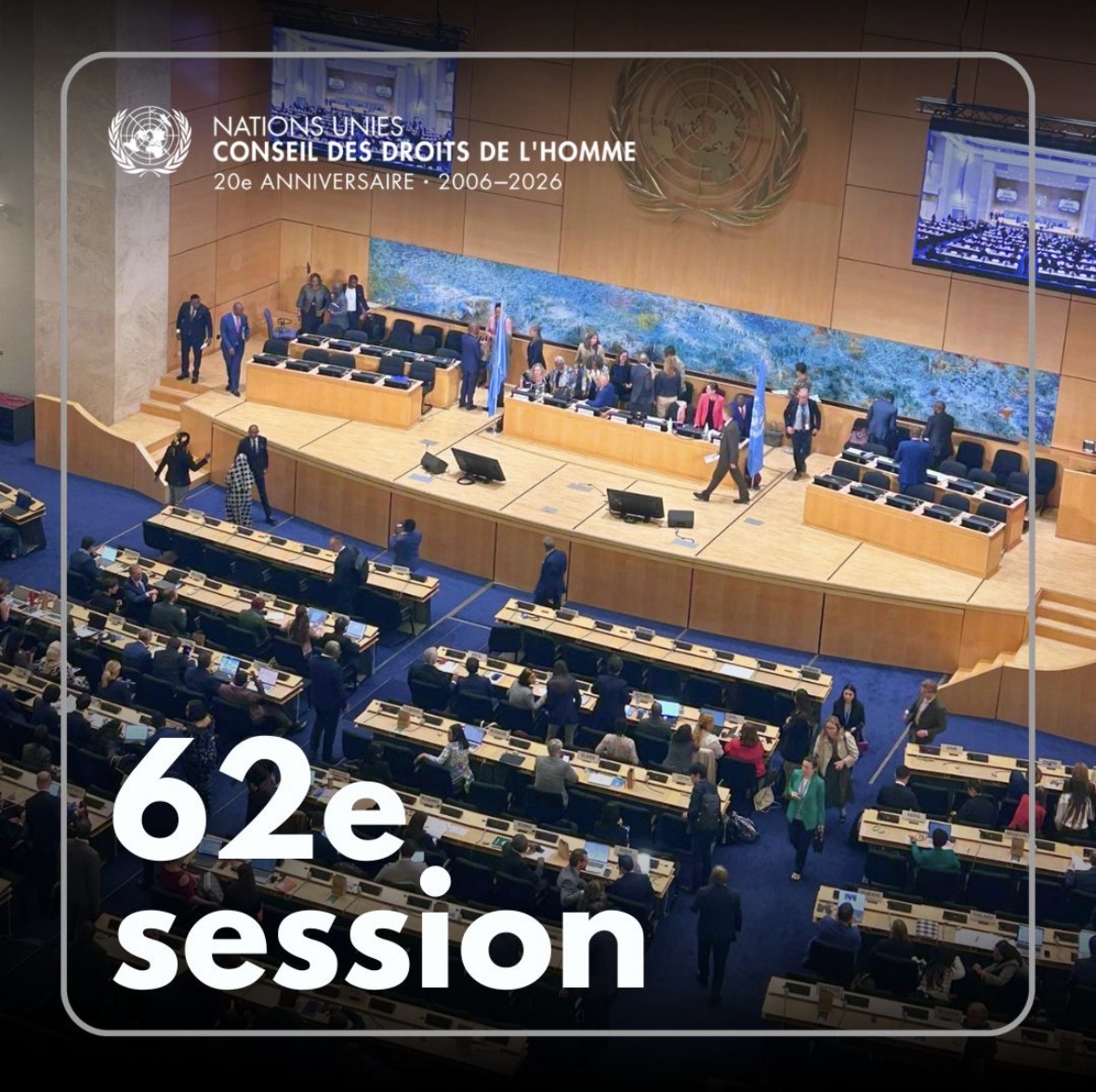
Last month, the 62nd session of the Human Rights Council (HRC) came to an end. Spanning 17 days, the session covered several key issues, such as climate change, food security, transnational corporations, and technical cooperation on healthcare. Among other events, CCIG was present for the “Commemoration of the International Day of Women in Diplomacy focusing on women’s right to work and representation in decision-making,” which was part of the Annual discussion on women’s rights.
During the debate, State representatives, NGO members, and panelists took the time to recognize the crucial roles that women play in the diplomatic processes. Across the board, speakers emphasized the importance of cultivating inclusive diplomatic settings and expanding access to environments where diplomacy is conducted. The discussion went beyond diplomacy, covering women’s rights in the working world overall. On this topic, speakers called for reductions in the gender pay gap and lowering the prevalence of gender stereotypes. Key recommendations included the creation of systems that support women’s capacity to succeed and fulfill their ambitions, in particular through the introduction of universal childcare policies.
Along with ensuring female representation in diplomacy, speakers focused on the intersection between AI and women’s rights. Several States emphasized the necessity of addressing gaps in internet connectivity, technological infrastructure, and underscored the importance of technology transfer and capacity building to bridge digital skill divides to help women and girls to fully benefit from technological advances.
In line with our members’ priorities, the CCIG strongly supports efforts to ensure that institutions accelerate progress to increase women’s representation and support their contributions in diplomacy. Institutions must actively build robust mentorship networks, secure full and meaningful participation, and reform workplace standards so female diplomats can successfully balance their career and family life. We look forward to continuing collaborations with local civil society actors who advocate for women’s rights in their home countries and across the globe.